
Monmouthshire horse cremations are arranged across a county whose ground changes character within a few miles, from the drained levels beside the Severn to the hill grazing climbing towards the Black Mountains, and that variety shapes almost every practical decision an owner faces at the end of a horse’s life. Heavenly Pastures provides specialist equine horse cremations for horses, ponies, donkeys and mules kept anywhere between Chepstow, Monmouth, Abergavenny and the Usk valley, and the team is used to reaching yards where the lane is narrow, the gateway is tight and the field has been standing wet since autumn.
What the Monmouthshire landscape means for equine collection
Monmouthshire is not a single kind of horse country. In the south the Gwent Levels run flat and low behind the sea wall, drained by a network of reens and ditches maintained for centuries, keeping the water table close to the surface all year round. North of Usk and Raglan the land begins to lift, and by the time it reaches Llanvihangel Crucorney and the lower slopes of the Skirrid and the Sugar Loaf it is proper hill grazing, with commons, bracken and steep stony tracks.
The Wye valley runs down the eastern edge in a wooded gorge where the lanes are narrow and overhung. Each of these settings presents a different problem when a horse has to be collected, and a team that already knows the county plans around it rather than discovering it on arrival.
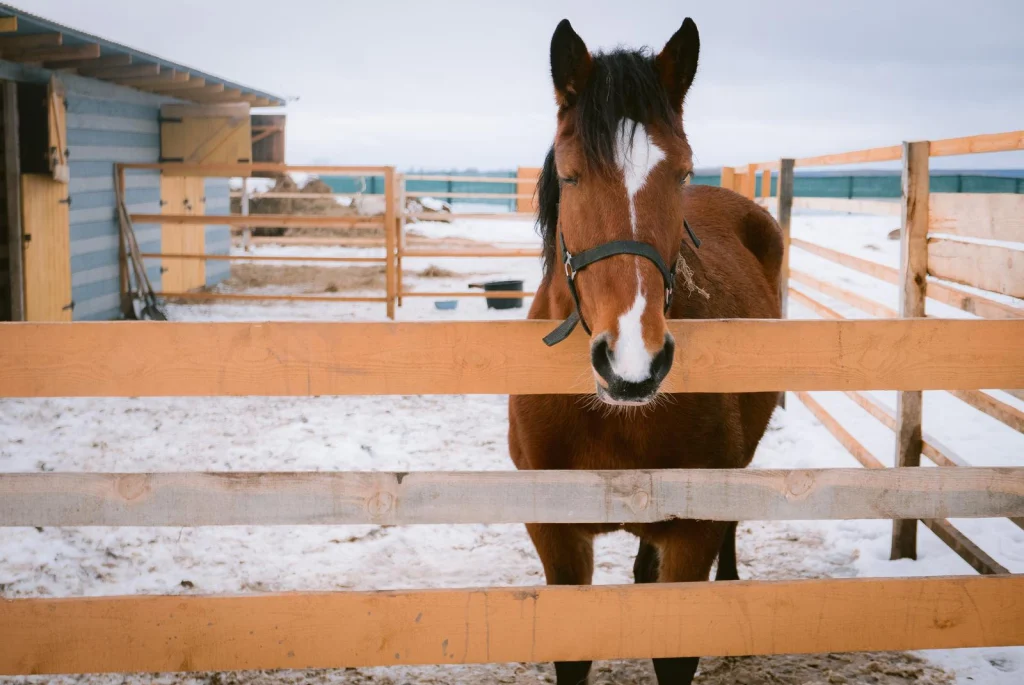
Access along the Wye and Usk valleys
The lanes serving yards above Tintern, Trellech and Llandogo were laid out for farm carts rather than for a lorry with a winch. Many drop steeply off the ridge, turn tightly between stone walls and offer no passing place for half a mile at a stretch. The same is true of the smaller roads running out of Usk towards Llangybi and Bettws Newydd.
When Heavenly Pastures takes a call from a Monmouthshire yard, the conversation covers the approach as much as the horse, because knowing in advance where a vehicle can turn and how close it can be brought to the field gate spares an owner a long and distressing wait while the practicalities are worked out on the day. Where a vehicle genuinely cannot reach the horse, the team talks through how it can be moved a short distance with dignity, using equipment designed for the purpose rather than improvised help borrowed from the yard.
Why burial is rarely a realistic option here
Owners on the Levels often ask about burial before they ask about anything else, and in that part of Monmouthshire the answer is almost always the same. The land between Magor, Undy and Caldicot sits barely above sea level, drained by reens that feed straight into open watercourses, and the water table is high enough that an excavation of the depth a horse requires will frequently fill before it is finished. Ground that looks bone dry in August tells a very different story in February.
Higher up the county the obstacle changes rather than disappears, because the hill land above Abergavenny lies thin over rock and a great deal of it is common or tenanted rather than owned outright. Cremation removes the question altogether, which is why so many Monmouthshire owners settle on it once the ground has been properly considered. The rules on burying or disposing of a horse are set out in the government guidance on fallen stock.
The first hours after a horse dies at grass
A horse found dead in the field is the hardest version of this for most owners, because nothing has been decided in advance and everything needs deciding at once. The immediate priorities are simple enough. The rest of the herd should be moved to another paddock or brought in, since companions will often stand over a body and can become agitated or very difficult to catch. A vet should be called if the cause is unclear or if other horses might be at risk.
Once those two things are done, arranging a cremation service following natural death is the next step, and it does not have to be rushed into within minutes. Heavenly Pastures regularly takes calls from owners still standing in the field, and the team is used to explaining what happens next to somebody barely able to hold a phone steady.
When euthanasia has been planned in advance
Where the decision has been reached with a vet over days or weeks, a great deal can be settled beforehand, and Monmouthshire owners who have been through it once tend to plan carefully the second time. Collection can be arranged for a specific window so that the horse is not left in the field for longer than necessary, and the vet, the yard owner and the family can agree between them where the horse will stand and who will be present.
Understanding how planned euthanasia and collection fit together removes most of the uncertainty from the day itself. It also leaves room to think about the small things that matter afterwards, such as taking hair from the tail or keeping the headcollar, which are easily forgotten in the moment and impossible to recover later.
Deciding what happens to the ashes
Two paths open once the horse has been collected. An individual cremation with ashes returned means the horse is cremated alone and the ashes come back in an oak casket with a brass nameplate, which many Monmouthshire owners then scatter on a hill they hacked over for years, or keep at home.
The alternative is a cremation without ashes returned, leaving the remains in the team’s care entirely, which suits owners who feel that what matters lives in memory rather than in anything physical. Neither choice is more respectful than the other, and nobody is pressed towards one. What matters is that the decision is taken calmly and understood clearly, because it cannot be revisited afterwards.
The horses left behind on a Monmouthshire yard
Companion loss is routinely underestimated. A pony that has shared a field with the same horse for a decade will call, pace the fence line and go off its feed, and on the hill grazing above Abergavenny and Raglan, where small groups run out together for months at a time, the change in the herd can be marked.
Allowing the remaining horses a short period with the body before collection, where that is safe and practical, appears to help some of them settle. Yard owners across the county also carry more of this than they are usually credited with, since they are frequently the ones who find the horse and who then hold the yard together through a very difficult week.
Reaching the team across Monmouthshire and the wider region
Heavenly Pastures covers Monmouthshire alongside neighbouring parts of south east Wales, and owners near the county boundary sometimes find a neighbouring page closer to where the horse is actually kept. Yards west of the Usk towards Pontypool and Cwmbran fall within the area covered by Torfaen horse cremations, holdings south of the Levels around the city are served by Newport horse cremations, and land north of Abergavenny towards Crickhowell and the upper Usk sits closer to Powys horse cremations. Wherever the yard sits, the same standards of handling and the same clarity about timings apply throughout.
Talking it through before it is needed
The most useful conversation an owner can have about Monmouthshire horse cremations is the one that happens while the horse is still well. It takes a few minutes, commits nobody to anything, and means that when the day arrives the yard already knows who to ring and what will follow. Owners who would rather ask their questions now than later are welcome to get in touch through the contact form, or to speak to the team directly on 01704 776976, where an unhurried discussion about Monmouthshire horse cremations can be had at whatever pace feels right.