
A Denbighshire horse cremation service has to work across three quite different landscapes, from the sheltered farmland of the Vale of Clwyd to the heather ridge of the Clwydian Range and out to the coastal strip between Rhyl and Prestatyn, and each of them changes what collection actually involves on the day. Heavenly Pastures provides specialist equine horse cremations for horses, ponies, donkeys and mules across the county, working with owners on hill holdings, smallholdings and established yards from Corwen and Llangollen in the south to the Dee estuary in the north.
Welsh Cob country and the horses of the Vale of Clwyd
Denbighshire keeps a particular kind of horse. The Vale of Clwyd and the land around Ruthin, Llanfair Dyffryn Clwyd and Llanrhaeadr have long been associated with the Welsh Cob, and it is common enough on these holdings to find breeding stock, veterans and youngstock all on the same farm, sometimes tracing back through the same family for three or four generations.
That matters at the end of a horse’s life more than it might appear. The loss of an old cob on a Denbighshire farm is often the loss of a bloodline the family has carried for decades, and owners frequently want the ashes returned so that the horse stays on the land where its line was bred. It is a different kind of grief from the loss of a single riding horse, and it deserves to be recognised as such rather than handled as routine.
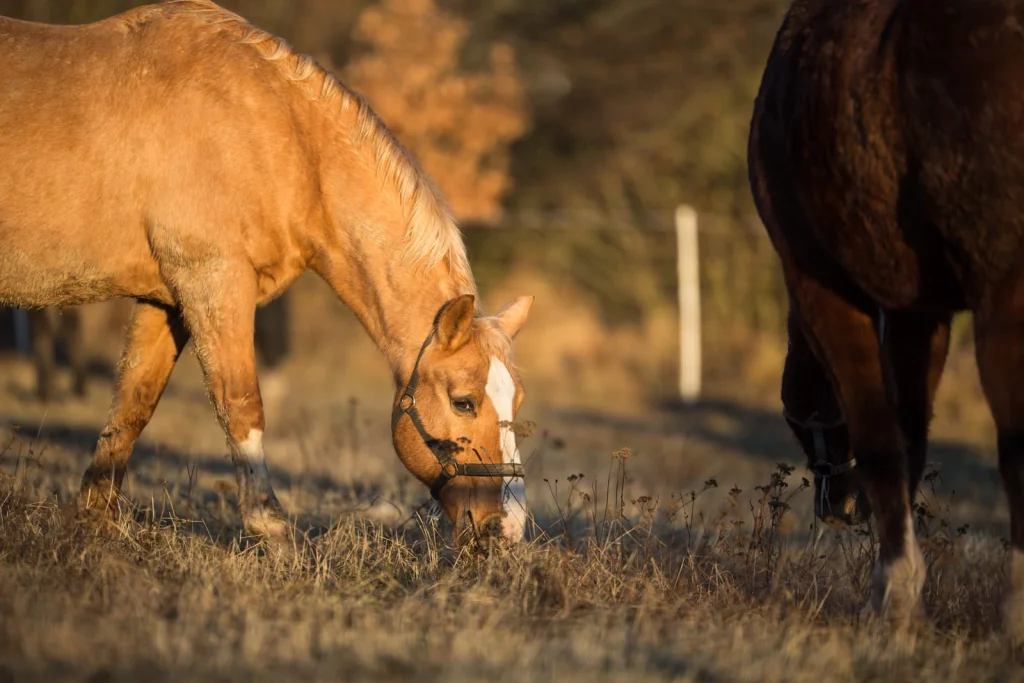
Reaching hill holdings on the Clwydian Range
West of Mold the ground rises quickly onto the Clwydian ridge, and holdings scattered up towards Llandegla, Bwlch Penbarras and the Llantysilio moors are reached by single track lanes with grass down the middle and gates that were built for a tractor rather than a lorry. Snow lies on that ridge later into spring than most owners expect, and the roads over the tops close before those in the valley do.
When a call comes in from a hill holding, the practical questions are asked early, covering how far a vehicle can come, what the surface is like beyond the yard and whether there is anywhere to turn. Establishing all this at the outset means that a Denbighshire horse cremation service arrives able to do the job rather than able only to assess it.
When a horse dies without warning on the hill
Sudden loss on exposed grazing brings its own difficulties, because a horse may be found some distance from the track and the weather may already be closing in. The first steps remain the same wherever it happens. Companions should be moved off or held in, since horses left with a dead herd member frequently become unsettled and hard to handle. A vet should be involved where the cause is unclear.
After that the priority is arranging a cremation service following natural death at a sensible pace, and the team will discuss access before setting a time, so that nobody is left waiting at a field gate in poor weather while a route is worked out. Owners in this position are rarely thinking clearly, and being asked a short set of practical questions by somebody who does this every week takes a considerable weight off.
Preparing for a goodbye that has been planned
Where a decision has been reached with a vet in advance, most of the difficulty of the day can be taken out of it beforehand. Owners planning a planned euthanasia in Denbighshire often choose a spot on the farm that means something, a field the horse always grazed or the top of the lane with the view down the Vale, and knowing that collection has already been arranged for a set window allows the day to be given over to the horse rather than to logistics.
It is also worth deciding in advance who will be present, since yard friends and family often want to be there and it helps if that has been agreed rather than negotiated on the morning.
The choice between ashes returned and care of the remains
Two routes are available afterwards. An individual cremation with ashes returned keeps the horse separate throughout and brings the ashes back in an oak casket with a brass nameplate, which on a Denbighshire farm is very often then scattered on the hill the horse grazed or kept in the house.
Alternatively, a cremation without ashes returned leaves the remains in the team’s care, which some owners find is the cleaner ending for them and which carries no less dignity in the handling. Both are treated with the same standards. What causes distress later is not the choice itself but making it in a hurry without understanding the difference, which is why the options are always explained plainly rather than assumed.
Coastal yards between Rhyl, Rhuddlan and Prestatyn
The northern edge of the county has its own character again. Grazing behind the coast road at Rhuddlan, Dyserth and Meliden sits on low, often heavy ground that holds water through winter, and the yards there tend to be smaller and closer together than the hill farms inland. Wind coming off the Irish Sea makes for hard winters even at sea level.
Collection is generally more straightforward on this side of the county, since the roads are wider and the yards more accessible, but the same care goes into the timings, because a horse standing in an open field in view of a busy lane is not something any owner should have to negotiate for long.
Where else the team covers across Denbighshire
Owners often find that a nearer page reflects their own patch better than the county one does. Yards in the Vale itself around the market town are covered by Ruthin horse cremations, holdings further north up the valley fall within Denbigh horse cremations, and grazing along the coastal strip is served by Prestatyn horse cremations. The full picture of where collections are made, both across north Wales and further afield, is set out on the areas we cover page for anyone whose yard sits close to a county boundary.
Owners weighing up burial at home should be aware that strict rules apply to horses, and the government guidance on fallen stock sets out what is and is not permitted.
Speaking to the team before the day comes
Most owners contact a Denbighshire horse cremation service for the first time on the worst day of their year, and it does not have to be that way. A short conversation while a horse is still sound settles the questions that are hardest to think about later, including access, timing and what happens to the ashes, and it leaves a note in the yard diary that anybody can act on. Anyone who would rather have that conversation now can reach the team on 01704 776976 for an unhurried discussion about how a Denbighshire horse cremation service works and what would suit the horse and the holding best.