
Halifax horse cremations are arranged by Heavenly Pastures for owners across Calderdale, from the yards around Northowram, Shelf and Southowram to the hill farms above Sowerby Bridge, Luddenden and Mytholmroyd and the steep grazing that climbs from the Calder valley onto the open moors. Few places in the North of England keep horses on such demanding ground. As a specialist provider of horse cremations, Heavenly Pastures offers Halifax owners a dignified and clearly explained farewell for a horse, pony or donkey, planned around the realities of the valley and the tops.
Horse Keeping Between the Calder Valley and the Moors
Calderdale is a landscape of deep, wooded valleys and high moorland. Many horses are kept on small, walled fields clinging to the valley sides, on smallholdings reached by steep setted lanes, or on moorland edge farms where the weather turns quickly. Riders use the Pennine Bridleway, the tracks around Ogden Water and the old packhorse routes that once carried goods across the hills, and many local horses are sure footed cobs and native ponies bred for this kind of country.
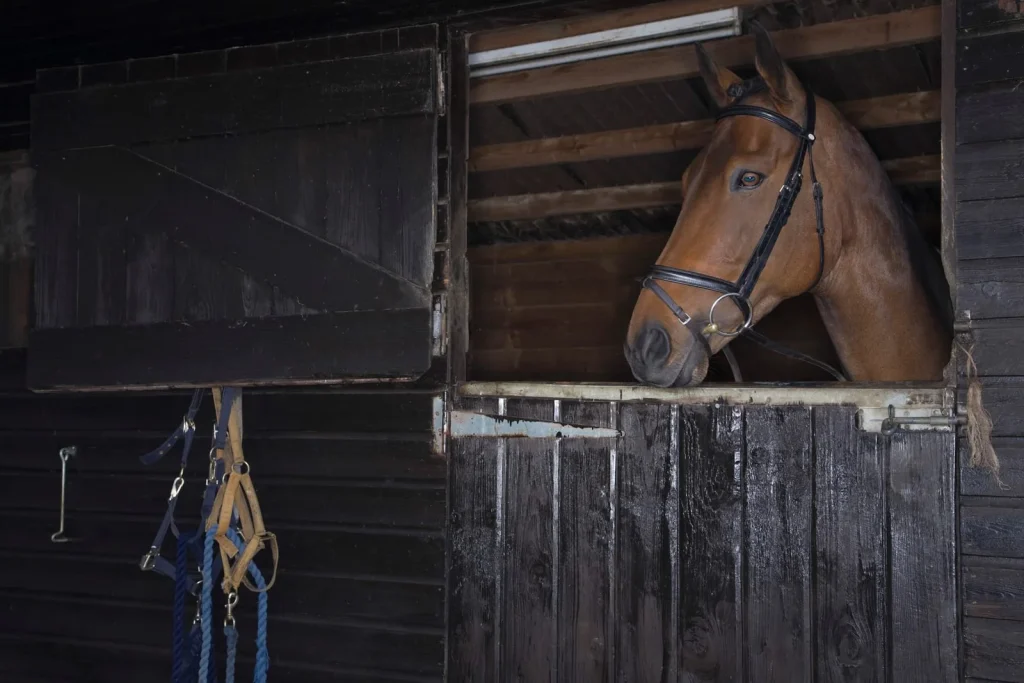
That terrain shapes every practical decision when a horse dies. A field above Luddenden may be reached only by a narrow lane with a tight turn, while a yard on the valley floor may flood after heavy rain on the tops.
Planning Collection on Steep Ground
The team asks about gradients, gateways and the nearest firm surface at the first call. Where a horse has died on a slope or in a field too steep or soft for a vehicle, the safest route is agreed with the owner in advance so that the horse can be moved with care. In snow or ice, the horse can be covered and kept cool while the team stays in touch until access is safe.
Owners on shared yards are encouraged to let other liveries know what is happening, so that horses can be brought in and the lane kept clear.
When a Horse Dies Suddenly
A sudden death from colic, a fall or a heart problem in an older horse is always a shock. The vet should be called first to confirm the death and record anything an insurer may require. The horse can then be covered and its companions moved a little distance away while still able to see. Heavenly Pastures then arranges a cremation service following natural death and agrees a clear collection time.
A Planned Goodbye in Familiar Surroundings
Where a veteran horse is struggling, owners often have time to decide with the vet. Planned euthanasia allows the goodbye to happen at home, on a settled day, with the horse calm among familiar people and companions. On valley side yards it helps to choose level, firm ground close to the lane, so that collection can follow without delay.
Many owners spend the final morning grooming, grazing in hand or simply standing quietly together. Keeping a headcollar, a shoe or a plait of mane gives the family something lasting to hold.
Older Horses Through Calderdale Winters
Winters in the upper Calder valley are wet, dark and long. Older horses can lose condition quickly once the grass goes, and steep, slippery fields add strain to stiff joints. Owners often notice a horse hanging back at the gate, struggling to rise or no longer lying down to rest. Talking these changes through with the vet in good time allows a calm decision rather than one forced by a fall or a storm.
Individual Cremation and Ashes Returned
Many Halifax owners choose individual cremation with ashes returned, so that the horse is cremated alone and the ashes come home. Some scatter them on the hillside where the horse spent its life, others keep them at home or bury them on family land. Owners who do not wish to keep the remains can choose cremation without ashes returned, which is carried out with the same respect. The rules on burying or disposing of a horse are set out in the government guidance on fallen stock.
Why Burial Is Rarely an Option
Burial of a horse on private land is only allowed in limited circumstances. In Calderdale it is usually ruled out by thin soil over gritstone, steep ground, rented grazing and fields close to the becks and reservoirs that feed the Calder. Cremation removes that uncertainty.
Companions Left on the Hillside
Horses on exposed valley side grazing rely on one another for shelter and reassurance. When one is lost, the companion left behind may call from the wall, pace the field edge or refuse its hay for a day or two. Letting it see and sniff the body before collection often helps it understand what has happened.
Bringing it into a stable near other horses, or onto a lower, more sheltered paddock, and keeping feeding and turnout times exactly as before can help it settle. Older ponies kept in long standing pairs may need a temporary companion while the family decides what to do next, and a quiet word with neighbouring yards can often find one.
Remembering a Horse From Calderdale
Many owners find comfort in small reminders, such as a headcollar hung by the stable door or a shoe kept from the last visit of the farrier. The Heavenly Pastures remembrance page is also open as a community tribute board, where Halifax owners can add a photograph and a few lines about their horse alongside tributes from owners across the North of England and beyond.
Serving Halifax and the Surrounding Valleys
The same care reaches owners right across West Yorkshire. Families further up the valley are supported through Hebden Bridge horse cremations, while yards to the south are covered by Huddersfield horse cremations. Owners to the north and east can turn to Bradford horse cremations, Leeds horse cremations and Wakefield horse cremations.
Owners in Halifax, Sowerby Bridge, Elland and the surrounding villages who need help can call 01704 776976 or use the contact form to speak with the team.